Diabetes is one of the most common chronic conditions affecting adults, yet many people don’t realize they have it until it has already progressed. The early signs can be subtle, easy to overlook, or mistaken for everyday fatigue or lifestyle factors.
Recognizing these warning signs early can help prevent serious complications and allow for timely treatment. If you live in Katy, TX or surrounding areas, understanding when to seek medical evaluation can make a significant difference in your long-term health.
🔷 WHAT IS DIABETES?
Diabetes is a condition that affects how your body processes blood sugar (glucose). When blood sugar levels remain elevated over time, it can lead to complications affecting the heart, kidneys, nerves, and other organs.
The most common type in adults is Type 2 diabetes, which often develops gradually and may not cause obvious symptoms in the early stages.
🔷 EARLY SIGNS OF DIABETES
Recognizing the early symptoms can help you take action sooner.
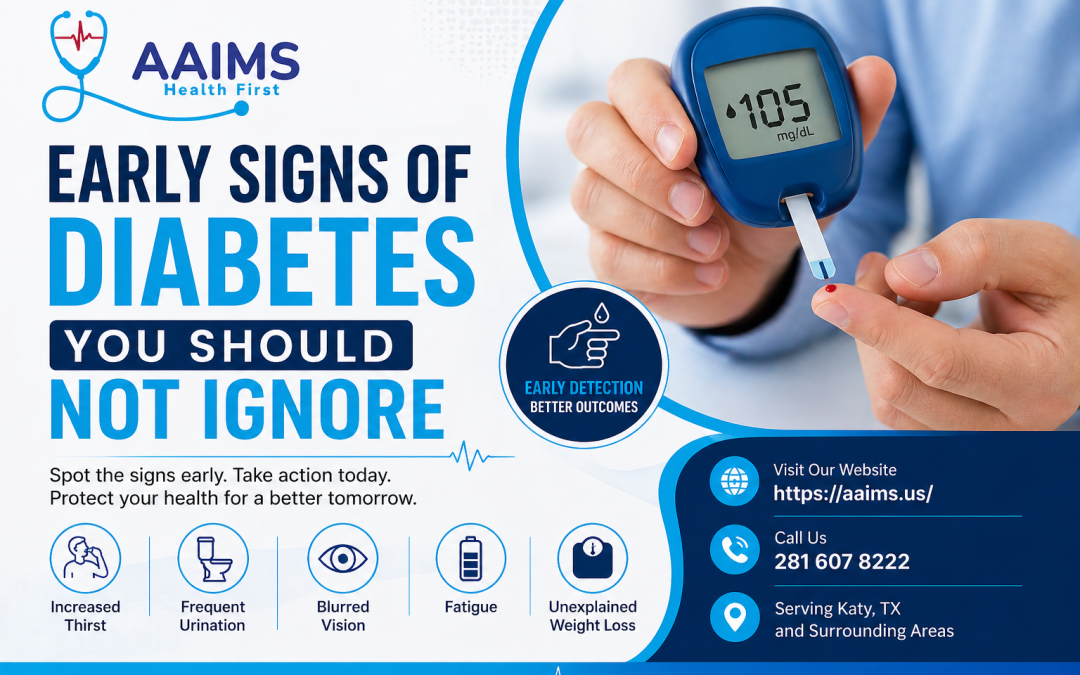
Increased Thirst
Feeling unusually thirsty, even after drinking fluids, can be an early sign of elevated blood sugar levels.
Frequent Urination
High blood sugar can cause your body to remove excess glucose through urine, leading to more frequent trips to the bathroom.
Fatigue
Persistent tiredness or low energy levels may be linked to your body’s inability to properly use glucose for energy.
Blurred Vision
Changes in blood sugar levels can affect the lenses in your eyes, causing temporary vision issues.
Slow-Healing Wounds
Cuts, bruises, or infections that take longer to heal may be a sign of impaired circulation and immune response.
Unexplained Weight Changes
Some individuals experience weight loss or gain without clear reason.
🔷 RISK FACTORS FOR DIABETES
You may be at higher risk if you:
- Are overweight or obese
- Have a sedentary lifestyle
- Have a family history of diabetes
- Have high blood pressure or high cholesterol
- Are over the age of 40
Understanding your risk factors can help you take preventive action earlier.
Don’t Ignore the Early Signs
If you notice symptoms or have risk factors, early evaluation can help protect your long-term health.
AAIMS provides personalized diabetes screening and management for patients in Katy, TX and surrounding areas.
📞 Call (281) 607-8222
📅 Schedule Your Appointment Today
🔷 WHY EARLY DETECTION MATTERS
Catching diabetes early allows for better management and can prevent serious complications such as:
- Heart disease
- Kidney damage
- Nerve damage
- Vision problems
Early treatment can significantly improve outcomes and quality of life.
🔷 WHEN SHOULD YOU SEE A DOCTOR?
You should schedule a visit if you:
- Notice any of the symptoms listed above
- Have risk factors for diabetes
- Have not had recent blood work
- Want preventive screening for peace of mind
If you’re searching for diabetes care in Katy, TX, early evaluation is one of the most important steps you can take.
👉 Learn more about our diabetes care services in Katy, TX.
🔷 HOW DIABETES IS DIAGNOSED
Diagnosis typically involves simple lab tests such as:
- Fasting blood sugar
- A1C test
- Glucose tolerance testing
These tests help determine whether your blood sugar levels are within a healthy range.
🔷 HOW PRIMARY CARE HELPS MANAGE DIABETES
Primary care plays a central role in both diagnosis and long-term management.
At AAIMS, care focuses on:
- Monitoring blood sugar levels
- Personalized treatment plans
- Lifestyle guidance
- Medication management when needed
- Preventing complications
Ongoing care ensures your condition remains under control.
🔷 FAQ
Can diabetes develop without symptoms?
Yes. Many people with early Type 2 diabetes have no noticeable symptoms, which is why screening is important.
Is diabetes reversible?
Prediabetes and early Type 2 diabetes can often be improved with lifestyle changes and proper medical care.
How often should I get tested?
Testing frequency depends on your risk factors, but many adults benefit from routine screening.
What is the most common early symptom?
Increased thirst and frequent urination are among the most common early signs.